Why So Many of Us Can’t Relax, Even in Savasana
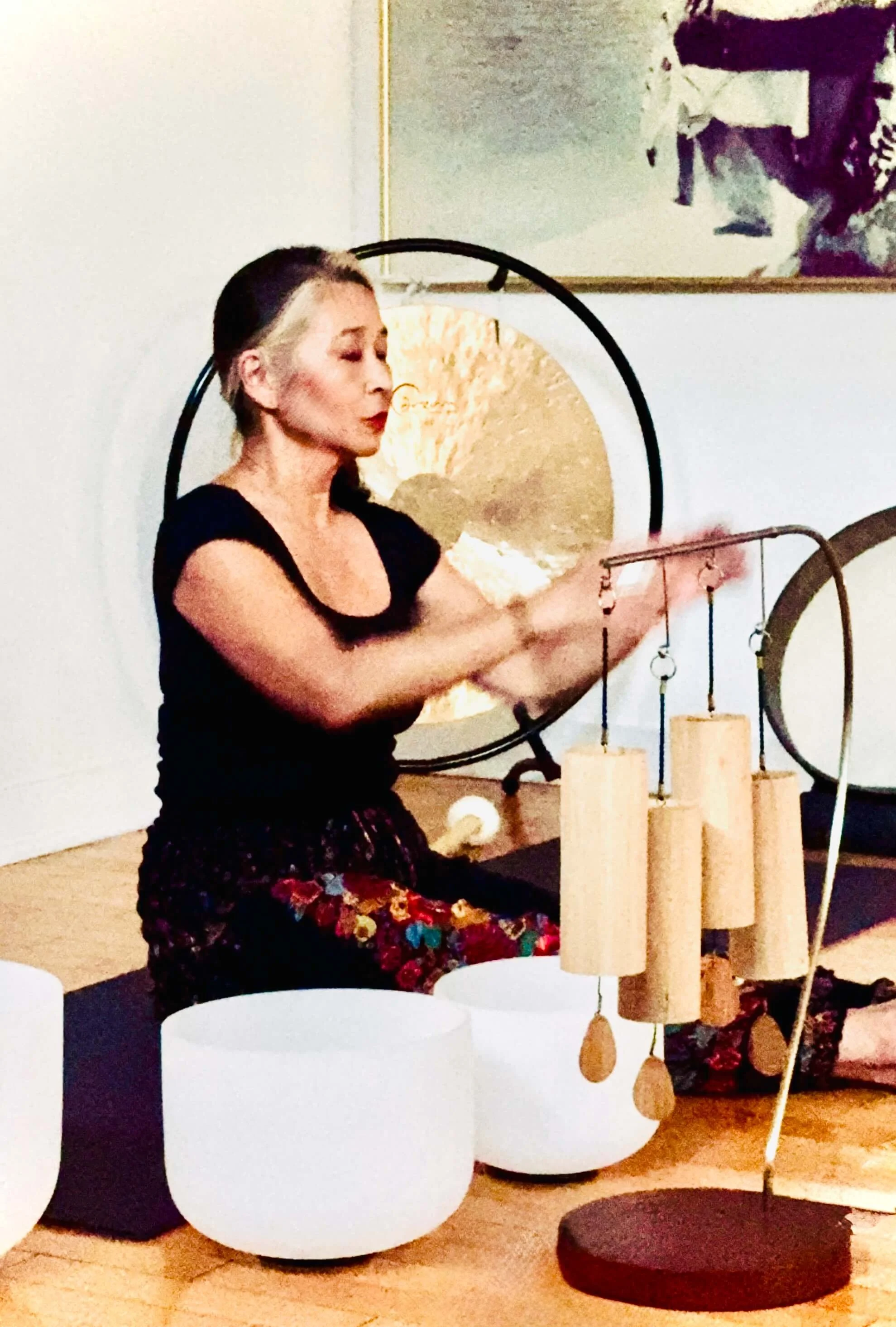
Sound Bath Session
An invitation to let go…
I teach yoga at the Sivananda Toronto Centre, and one of the things I’ve noticed during classes is just how much tension people carry; even in Śavāsana (corpse pose). Limbs feel rigid under my fingertips. Breathing is shallow. Some people forget to breathe at all.
It’s not that anyone is “doing it wrong.” It’s that many of us have been living in a state of low‑grade vigilance for so long that the body doesn’t remember what “off” feels like.
I’ve seen this in myself too. Whenever I went to visit the massage therapist, they would ask me why I was wearing my shoulders as earrings. I didn’t even realize I was holding them there; it had become my baseline. And I would hear my fellow colleagues who managed offices talk about their sleep issues, so common, so normalized, that no one questioned why rest had become so elusive.
Sound baths didn’t magically fix this overnight. But they did open a small doorway. The combination of vibration with a simple yin pose created a kind of softness I hadn’t felt before, not dramatic, not cinematic, just a quiet shift. A little more breath. A little less gripping. Enough to make me curious. And for many people, it’s also a great alternative to meditation — a way into stillness that doesn’t require sitting perfectly still or wrestling with the mind.
That curiosity led me into the research.
Chronic tension isn’t a personality trait — it’s a physiological state
Studies in adult mice undergoing chronic stress show long‑term signs of anxiety, depression, and cognitive impairment. Their nervous systems adapt to stress by staying on high alert, even long after the stressor is gone. The research describes persistent changes in behavior, hormone regulation, sleep patterns, and even brain structure.
Humans aren’t mice, but our nervous systems behave in surprisingly similar ways.
When someone has been living in a sympathetic‑dominant state (fight/flight/freeze) for months or years, the body normalizes vigilance. Muscles stay slightly contracted. Breath stays shallow. Even lying on the floor in a quiet room, the body doesn’t immediately trust the invitation to soften.
What I notice in the studio
As my hand lightly touches someone for an adjustment, I can feel how much tension they’re carrying; rock hard bodies (and not in the good way), shoulders that won’t drop, hips that won’t release, backs that stay subtly lifted off the mat. It’s not intentional. It’s simply the nervous system doing what it has learned to do: stay ready.
It’s not lack of effort — it’s lack of safety.
Why sound helps the body shift
Sound vibrations stimulate the vagus nerve; the main highway of the parasympathetic nervous system. Slow, harmonic frequencies help the brain shift from alertness into the slower waves associated with rest and repair. And when you pair that with a long‑held, supported yin pose, the body finally has fewer reasons to stay on guard.
Only in the parasympathetic state can the body truly heal. And many of us simply don’t spend enough time there.
This is why I facilitate sound baths. Not because they are a cure‑all, but because they create conditions where the body can remember softness again. Because I’ve watched how a single yin pose paired with vibration can unlock something that talking, stretching, or “trying to relax” can’t touch.
A gentle reminder
Your body isn’t stubborn. It’s adaptive. It’s protecting you in the only way it knows how.
And with the right conditions; stillness, breath, vibration, time; it can learn its way back to softness.